



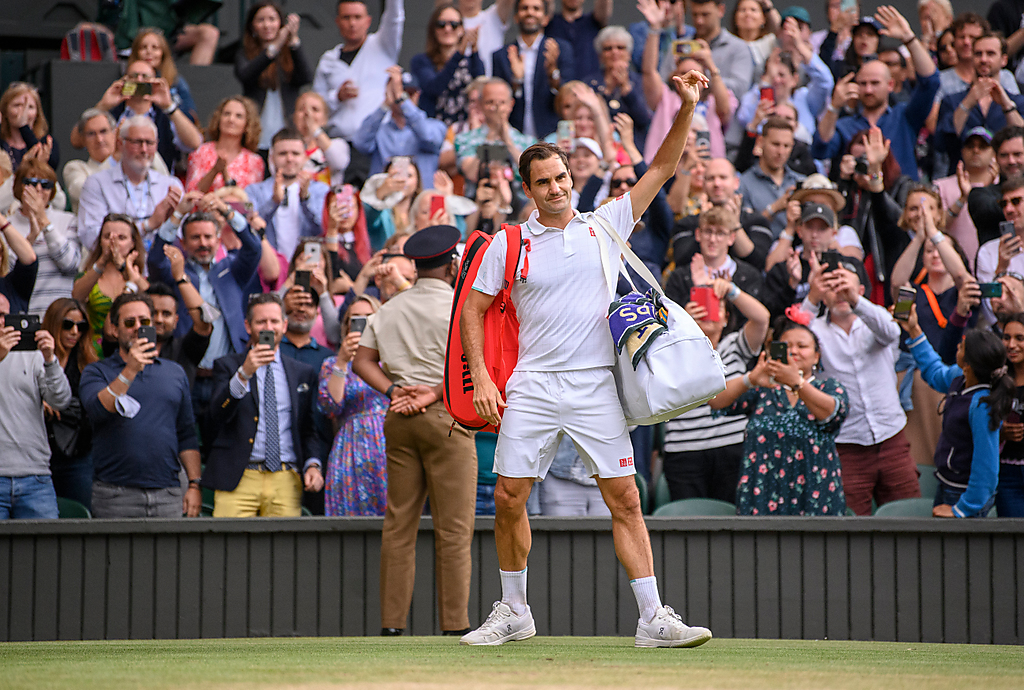
As the weeks passed since Wimbledon, the news about Roger Federer became increasingly worrisome to his wide legion of admirers all over the globe. He had reached the quarterfinals at the All England’s Club, and that was no mean feat. About one month shy of his 40th birthday, Federer established himself as the oldest man to reach the last eight at Wimbledon in the Open Era, and the oldest at any major since 43-year-old Ken Rosewall at the Australian Open in December of 1977.
But I digress. Despite his remarkable showing at Wimbledon, the fact remained that the Swiss Maestro performed abysmally toward the end of his straight set skirmish against Hubert Hurkacz, dropping the third and last set 6-0. Federer would say not long after that disconcerting day that he had aggravated his knee during the grass court season, but some insiders are suggesting that the injury occurred during his defeat against Hurkacz.
Whether that was the case or not, Federer’s comeback after enduring two knee surgeries across 2020 had been halted. Soon he would pull out of Toronto and Cincinnati on the ATP Tour, and it was apparent that he would either come to the U.S. Open badly prepared, or not go to New York at all.
Now we know that Federer will not be among the 128 players in the men’s draw at the Open because he will be soon undergoing yet another knee surgery in the hopes that he might improbably return to the ATP Tour next year. As he addressed his multitude of followers on social media a few days ago, Federer sounded realistic about his aspirations. He simply wanted to let his fans know what was going on in Federer World and give them the benefit of seeing him on camera and hearing how he felt about his current predicament.
Federer did not let his admirers down. He spoke to the public graciously on social media without looking through rose-tinted lenses. He said, “I’ve been doing a lot of checks with the doctors, as well, on my knee, getting all the information as I hurt myself during the grass court season and Wimbledon. Unfortunately, they told me for the medium to long term, to feel better I will need surgery, so I decided to do it. I will be on crutches for many weeks and then also out of the game for many months.”
He spoke about his desire to be physically healthy, and then added, “I want to give myself a glimmer of hope, also, to return to the tour in some shape or form. I am realistic, don’t get me wrong. I know how difficult it is at this age right now to do another surgery and try it [making a comeback].”
Those were poignant words from a champion who knows what he is confronting, realizes that returning to big time tennis and living up to his lofty standards will be arduous, and understands the immense size of the challenge ahead. Listening to the Swiss conveying his thoughts, I had the distinct feeling that Federer is bracing himself for the likelihood that he will never again be even remotely what he once was.
Beyond that, Federer was simply dealing with a harsh reality he could not have imagined when he left Wimbledon after a reasonably good run. To be sure, he knew that he was ailing, but he hoped having another surgery would not be part of the equation. And yet, here he is now, facing the future with cautious optimism, trying to figure out a path to lead him back toward where he wants to be, hoping he can reinvent himself convincingly, and determined to recover from another surgery and perform at least selectively on his own majestic terms.
Keep in mind that Federer has been through this routine too many times over the years. In 2016, he was playing with his children a day after losing in the semifinals of the Australian Open to Novak Djokovic, and he felt something strange in his knee. That led to a February 3 surgery for a torn meniscus. He returned in the spring but had to close that season down after a semifinal defeat at the hands of Milos Raonic at Wimbledon.
Federer took an awkward fall during that loss to the Canadian and had to do rehabilitation on the knee. He did not play again in 2016 but remarkably returned in Melbourne for the 2017 Australian Open and improbably pulled off no fewer than three five set victories in his spectacularly triumphant run, toppling Kei Nishikori, Stan Wawrinka and Rafael Nadal in those memorable contests. His rescue mission from 1-3 down in the fifth against Nadal when he captured five games in a row for his fifth Australian Open crown was a career defining moment.
The resurgent Federer secured an eighth Wimbledon title later that year and then defended his Australian Open title with a five set triumph over Marin Cilic at the start of 2018. He very nearly achieved a career groundbreaking honor at Wimbledon in 2019 when he reached his twelfth final on the Centre Court by ousting Nadal in a sterling semifinal performance. In the final, he served for the match at 8-7 in the fifth set, reaching 40-15 and double match point on his serve against Novak Djokovic in the sixteenth game, only to lose that stirring encounter with the Serbian. Federer had never stopped Nadal and Djokovic in the same Grand Slam tournament, and so his historic bid fell narrowly and agonizingly short.
Be that as it may, his body was holding up surprisingly well in that stretch from 2017-2019. But then he suffered a setback at the start of 2020 after losing to Djokovic in the semifinals of the Australian Open, and was out for the remainder of that season. In that period he had two more knee surgeries. Federer was not ready to play at the Australian Open this year. He made his comeback in Doha this year on the hard courts, losing to Nikoloz Basilashvili in the quarter finals. His knee was still burdensome so Federer waited until Geneva on the clay to appear again, dropping his first match there in the round of 16 to Pablo Andujar.
Then Federer managed to record three match triumphs at Roland Garros on his way to the round of 16, but, concerned that he could hurt himself again, he defaulted against Matteo Berrettini in the round of 16. On to Halle he went, but Federer won only one match there before bowing out against Felix Auger-Aliassime. He did manage to move on to the quarterfinals of Wimbledon which was no mean feat under the circumstances, but his knee was acting up again. And so now he is where he is after all of the stopping and starting. Even for someone of Federer’s stature and stability, these are daunting times. For more than a year-and-a-half, he has been thrown into a world of uncertainty.
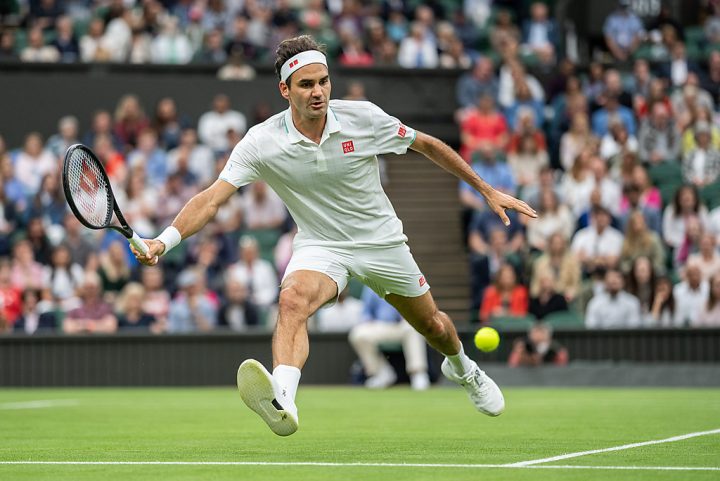
And so he will take it step by step in the months ahead, recognizing that things might not turn out quite the way he wants. But Federer surely knows that, even if he had stayed healthy, collecting more major titles was going to be awfully tough at his age. If he has the good fortune to emerge from his upcoming knee surgery with a clean bill of health for most of 2022, Federer may need to accept a standard that he would have scoffed at in days gone by. After every match victory at Wimbledon this year, Federer seemed to savor the moment more thoroughly than ever before, perhaps feeling internally that this was as much as he could ask of himself.
The feeling grows that Federer will not play on much longer. It is entirely possible that one way or another he won’t play much in 2022. Even in a best case scenario, it is hard to imagine him playing beyond next year. If that is the case, he should have few regrets.
He might be somewhat dismayed that Djokovic and probably Nadal will surpass him at the majors in the next year and beyond. All three superstars have secured 20 career majors, but this three-way tie could well be broken by Djokovic at the U.S. Open. Yet there are so many achievements Federer can celebrate— and console himself with— if his career is indeed almost over now.
He has won 103 tournaments across the years, and that is second only to Jimmy Connors (109) in the Open Era among the men. He holds the record for most Wimbledon singles titles taken by a man with eight. He has had winning streaks of five titles in a row at both Wimbledon (2003- 2007) and the U.S. Open (2004-2008), a feat unmatched by anyone in the history of the game.
There is more. Federer’s consistency across his prime at the majors was unparalleled. He set an astonishing record by reaching 23 consecutive semifinals at the Grand Slam events (2004-2010) and he also advanced to at least the quarterfinals of 36 straight majors (2004-2013). His consistency from his early twenties through his thirties was astounding. His longevity is beyond reproach; Federer established himself as the oldest man ever to reside at No. 1 in the ATP Rankings at the age of 36 in 2018.
On the flip side of the coin, Federer will almost certainly finish behind both Nadal and Djokovic in his career head to head meetings against his two foremost rivals. Nadal currently leads Federer 24-16 in their rivalry, including triumphs in six of their nine finals at the Grand Slam tournaments. Federer also trails Djokovic in their career series—the Serbian is ahead 27-23. Moreover, Djokovic has the edge over Federer 4-1 in final round duels at the majors.
Be that as it may, Federer should feel awfully proud of what he has done, and not the least bit regretful if he is unable to ever compete again on the premier stages—or anywhere else for that matter. Roger Federer has been a singularly popular player for the bulk of his career, cheered on vociferously by audiences everywhere he goes, buoyed by his vast appeal as the sport’s most elegant stylist, inspired above all else by knowing that his artistry has never been taken for granted by learned tennis observers.
If Federer is able to play on for another year, he should consider himself one fortunate fellow. If not, he must meet that moment of departure with equanimity, and remind himself that playing such a transcendent role in the game’s evolution as the most revered tennis figure of modern times is perhaps Federer’s largest contribution to a game that he loves unabashedly.
___________________________________________________________________________
Steve Flink has been reporting full time on tennis since 1974, when he went to work for World Tennis Magazine. He stayed at that publication until 1991. He wrote for Tennis Week Magazine from 1992-2007, and has been a columnist for tennis.com and tennischannel.com for the past 14 years. Flink has written four books on tennis including “Dennis Ralston’s Tennis Workbook” in 1987; “The Greatest Tennis Matches of the Twentieth Century” in 1999; “The Greatest Tennis Matches of All Time” in 2012; and “Pete Sampras: Greatness Revisited”. The Sampras book was released in September of 2020 and can be purchased on Amazon.com. Flink was inducted into the International Tennis Hall of Fame in 2017.
.

