



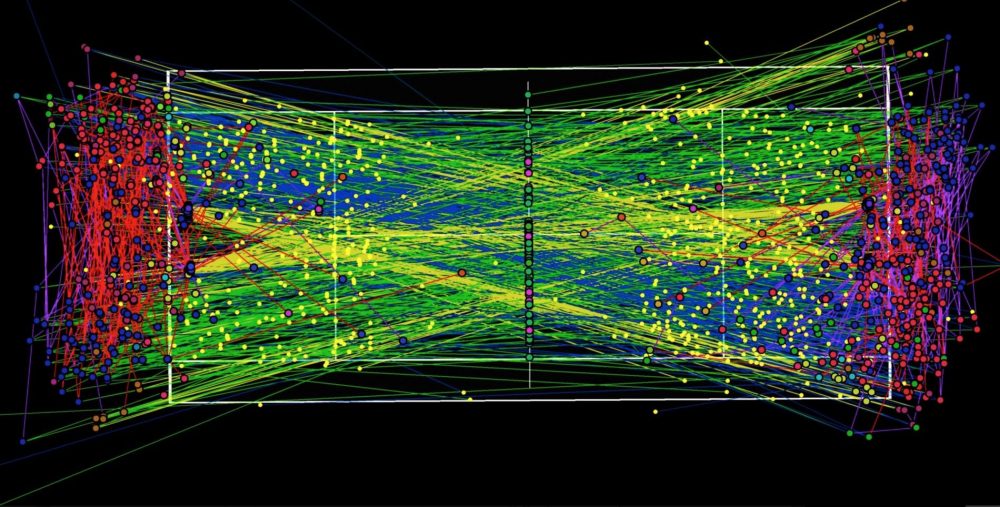
THIRD CATEGORY: HAWKEYE DATA
Finally, the third category concerns the analytical data of shots played, that is the raw Hawkeye data of which access is however precluded, or granted only to a select few (rumours have it that Golden Set Analytics has access to this dataset and therefore provides advanced insights based on the aforementioned data, clearly in return of a hefty toll). However, given the general unavailability of the data and the growing interest from players and coaches, several start-ups and freelancers offering this type of services are emerging – the first article in the series pertains this subject, including the reported sum paid by Roger Federer to acquire the best information on the market.
Therefore, approaches are currently mostly based on chartings of matches carried out manually. The aim is to add this information to the ATP data and to be able to build a wide database that can allow us to carry out studies on individual players and their characteristics. However, approaches based on the use of artificial intelligence techniques are emerging. These approaches allow the automation of this data collection process and in the future could fill that gap of data not currently provided by official sources. In these cases, data management combined with presentation methods could provide easy-to-use and interpretive insights. As a result, this combination can spur a concrete upgrade in the match preparation by coaches. Below you could find an example of Data Driven Sports Analytics insight.

Finally, every shot played on a tennis court can be considered as the elementary unit, the Lego brick on which a tennis match is built; these bricks are then aggregated into discrete structures that follow the rules defined in the scoring hierarchy. If they were objects in a database, they would be characterised by the following attributes:
Currently we only have aggregate data relating to the serve. They are available freely from official public sources. Then we have a much more limited basis composed by summary data taken from Hawkeye data during Masters 1000 and Grand Slam tournaments, but the future looks peachy, at least in this regard. As for how these data are collected, well, just stay tuned for the next instalment in the series.
Article by Federico Bertelli; translated by Giuseppe Di Paola; edited by Tommaso Villa

