



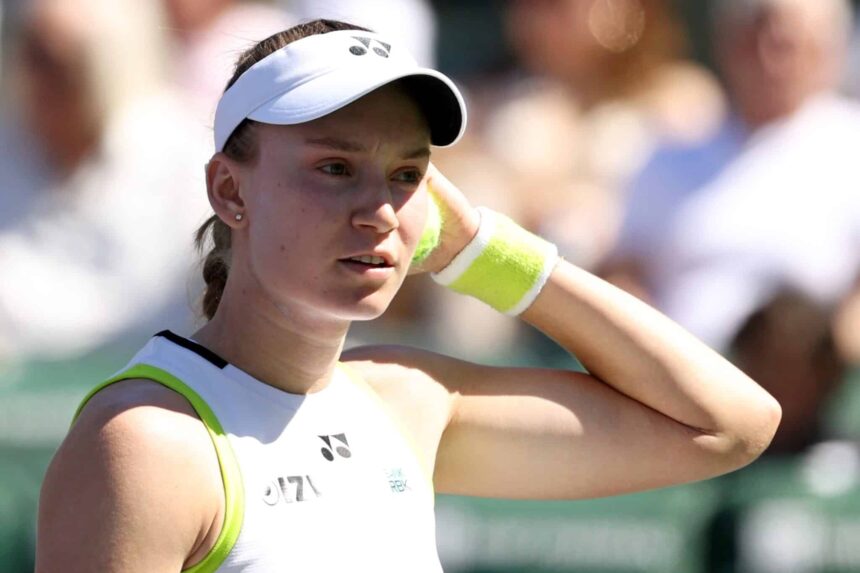
It is a case of what could have been for two Wimbledon champions after they both exited the women’s draw on Saturday in straight sets.
Elena Rybakina and Iga Swiatek were seeded second and third in this year’s draw. Their exit means the tournament could get another brand-new champion in 2026 unless the only former champion left in the draw, Barbora Krejcikova, wins the title. The past eight editions have been won by first-time Wimbledon champions, with Serena Williams being the last to defend the title in 2016.
Rybakina crashed out of the tournament following a straight-sets loss to Elise Mertens, whom she has previously beaten seven times on the Tour. The 2022 champion struggled with her serve throughout the match, hitting six double faults and winning only half of her service points during the second set.
“I got many opportunities in the first set to break. I lost my serve very easily with too many double faults in the match,” said Rybakina.
“The first serve was not really working for me. I feel like the energy could have been better. A lot of things which I’m not happy with.”
Coming into Wimbledon, Rybakina had failed to win back-to-back matches at three consecutive tournaments. The fall in her form is a stark contrast to the start of 2026, when she won the Australian Open before reaching the final in Indian Wells six weeks later.
“If I knew why, I wouldn’t be in this situation right now,” she replied when asked about the cause of her drop in form.
“I have been working well in the past weeks. I was getting a lot of opportunities since I was losing early in the tournaments.
“I need to analyse and change something, because it’s not working.”
Slow serves, more trouble for Swiatek
Swiatek’s hopes were dashed by Filipino rising star Alexandra Eala. For the Pole, it is her earliest exit from a major in two years. As a result, next week she will exit the top five for the first time since June 2025.
As to what particular area of Eala’s game caused the former world No.1 trouble, Swiatek said it was the speed of her serve. Even though her average was noticeably slower. Eala’s first serve average was 140 km/h, 25 km/h less than her opponent. Her second was also 22 km/h slower (123 compared to 145).
“It was tougher mentally for me to accept these missed returns from the slow serves,” Swiatek said of her loss.
“It’s much tougher to return a serve like that than a normal serve.
“It was a good fight. I know that one ball here or there could change a lot (in the first set).
“But I wanted to be present in the second set. I made some unforced errors at the beginning. Then, I felt like she was serving slower and slower, and it became tougher and tougher for me to return these serves. That, for me, was hard to accept.”
As for her approach to the sport, Swiatek explains that she is no longer focusing solely on her results in order to give herself some more freedom in her career.
“You need to trust the process. I don’t care anymore about the results. I’ve been so focused on them that it’s hard to continue like that. So I’m really trying to let it go,” she explains.
“I don’t have good results, so I’m not going to expect good results for myself because they’re just not happening. I’m not on that level yet. I need to work from the beginning and try to just get my tennis better.”

