



The head of tennis Australia has issued a stark warning to the sport that he believes it will be a long time until it returns back to normal due to the COVID-19 pandemic.
Craig Tiley, who is the tournament director of the Australian Open, admits the present challenges posed by the pandemic are showing no signs of letting up. He is currently awaiting a response from local governments regarding travelling restrictions. The decision will influence what tournaments may or may not take place during the start of next year with the possibility of all players being kept in Melbourne.
“Right now the state borders are not open, they’ve been closed for more than six months,’ Tiley told The Daily Mail. “We need a guarantee that for instance, if you were playing in Brisbane and all of a sudden 100 new cases cropped up, would you then require a new two-week quarantine coming from there into Melbourne?
“We said from the beginning that if quarantine plans are approved across the states then we can play across the cities, otherwise we have to contract everything to Melbourne, because that’s where everyone has to be in late January.”
Players travelling to Australia have already been told that they will need to quarantine for 14 days upon arrival but they should be allowed to practice. Although a plan for them to also be allowed to participate in tournaments during this period have been refused by officials.
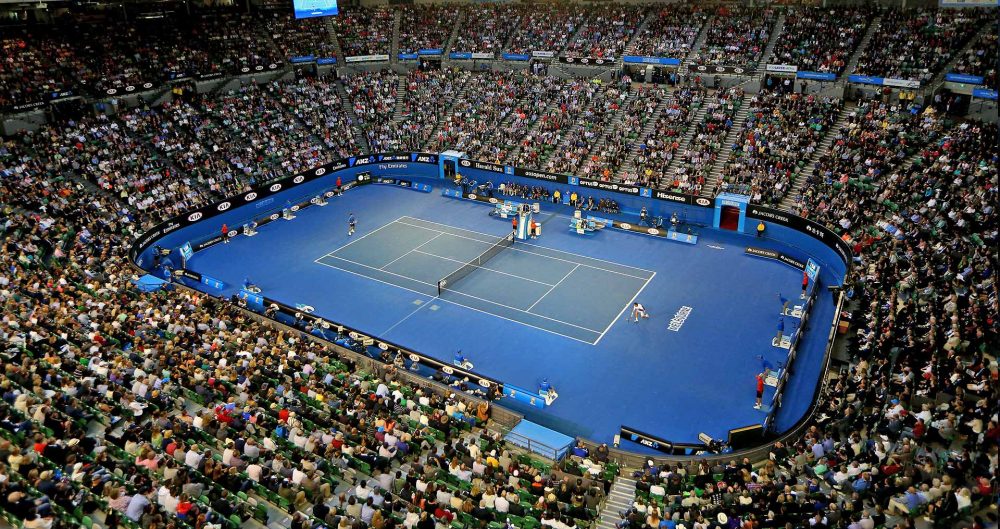
This year’s Australian Open was the last Grand Slam to take place under ‘normal’ circumstances with no travel restrictions or attendance limits. Since then, the Wimbledon Championships was cancelled for the first time in the Open Era, the US Open was held behind closed doors and the French Open was moved from June to September with reduced crowds.
Due to the impact of COVID-19, Tiley believes the chances of Melbourne hosting their major in ‘normal’ capacity may not happen until at least 2023. Besides the travel restrictions, the pandemic has also had a huge financial impact on the sport. For example revenue at this year’s US Open was down 80% due to the absence of fans, according to USTA CEO Mike Dowse.
“I’m of the view that these current adjustments will last longer than we think,’ he said. ‘We are already talking about different (Australian Open)scenarios for 2022, because we don’t think we will be repeating 2020 (the ‘normal’ Grand Slam event which took place in January) until at least 2023 or 2024.’
“That’s how we are managing our risks and our cash flow. Professionally we need to be realistic and manage players’ expectations on money and opportunity and make sure that events can be sustainable for the future.”
Tiley has also warned that some tournaments will not be able to survive due to the financial impact. On the ATP Tour 250 events could face tough times ahead from 2022 should a strategic plan get approval. Chairman Andrea Gaudenzi wants Masters 1000 events to be extended which will result in six of the smaller events taking place during the second week of those events. Something that could have a negative impact on their ability to attract top names to their events.
“’The reality is the money that is going to be available will be significantly compromised. I think the stronger events will survive, and those that were carrying a heavy financial load will not. It’s unrealistic to think that it’s not going to change. Even if you had a vaccine in March it is still going to be challenging for half of next year,” Tiley commented.
It is understood that a decision regarding the travel limitations on players in Australia next year will be made by the end of this week.

