



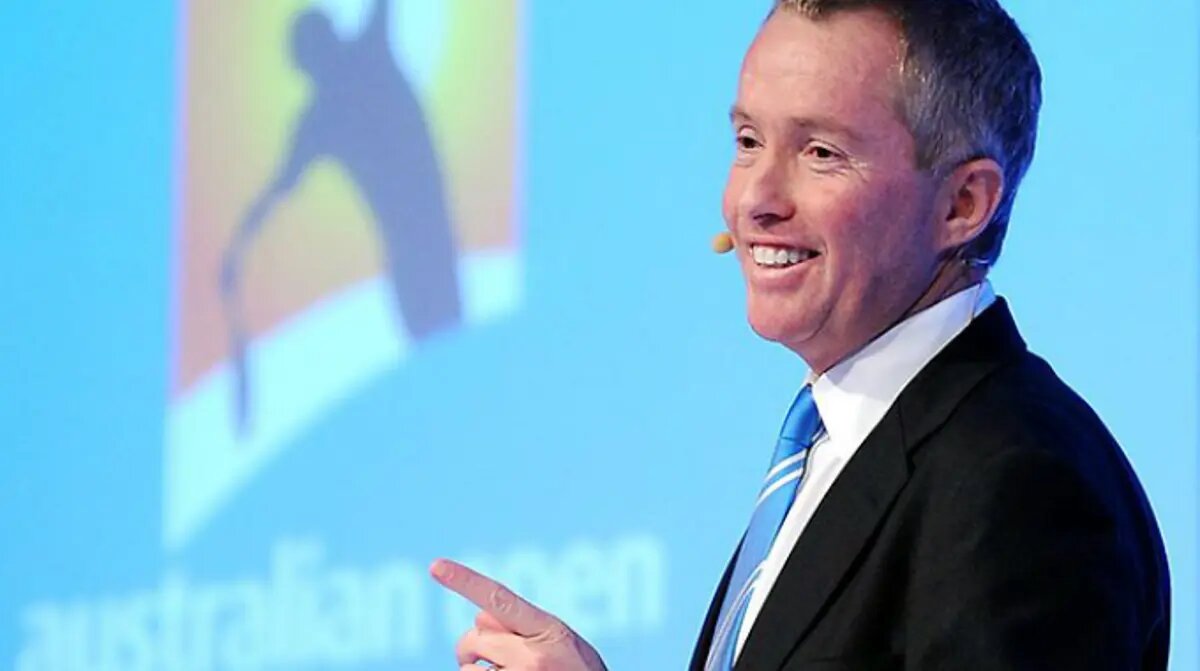
The head of Tennis Australia said over the past few weeks there has been ‘conflicting information’ regarding player visa applications but has refused to point fingers at who is to blame.
Craig Tiley has defended his organisation’s management of the medical exemption process amid media reports that guidance sent to players during December regarding unvaccinated players differs to what the health minister said in a letter the month prior. World No.1 Novak Djokovic is currently in a quarantine hotel after the Australian Border Force refused his visa because he ‘failed to provide appropriate evidence to meet entry requirements.’ Djokovic has launched a legal appeal against that decision with a hearing taking place on Monday.
Four days on from the initial decision to refuse the visa, Tiley spoke out publicly for the first time. The head of the Australian Open claims his organisation was constantly dealing with conflicting information throughout the process. However, he has declined to say if this was the cause of Djokovic’s visa being refused. The Serbian’s medical exemption was granted by two independent panels on the ground that he recently tested positive for COVID-19. However that condition failed to meet the requirements of the federal authorities.
“During the US Open only 50 per cent of the playing group was vaccinated and today it is more than 97 per cent and that is partly due to the efforts we (Tennis Australia) has made,” Tiley told 9 News.
“However, on the course of this journey as the introduction of medical exemptions there were plenty of contradictory information and plenty of conflicting information. We were constantly seeking clarity from day one to ensure we did the right thing.”
Asked if Tennis Australia issued incorrect guidance to players regarding medical exemptions, Tiley sidestepped the question. Instead, he said the advice given was based on ‘all the information’ availabile. He made no comment on if the advice sent by the Australian Health minister concerning unvaccinated players in November had changed by the time Tennis Australia sent documentation to their players about medical exemptions.
“All the information we had at the time was supplied to players,” he insisted.
“There were always going to be a handful of people who required medical exemptions. We worked closely with the Victorian government. There were two panels that everybody had to go through in order for them to be exempt. That was done and managed through the state government.” He added.
So who is to blame for the visa fiasco? Besides Djokovic, women’s doubles player Renata Voráčová had her visa removed and has subsequently left Australia. Even though the Czech was initially allowed into the country and even played a first round match at the Melbourne Summer Set 2 earlier this week.
“We are not going to lay the blame on anybody primary because there was much contradictory information the whole time,” said Tiley. “Every single week we were talking to Home Affairs and all parts of government to ensure we were doing the right thing.’
“The contradictory information that you are receiving is because of a changing environment.”
Tiley says he would like Djokovic to play at the Australian Open. He has so far dismissed speculation that he may have to resign from his post as a result of the fallout.

