



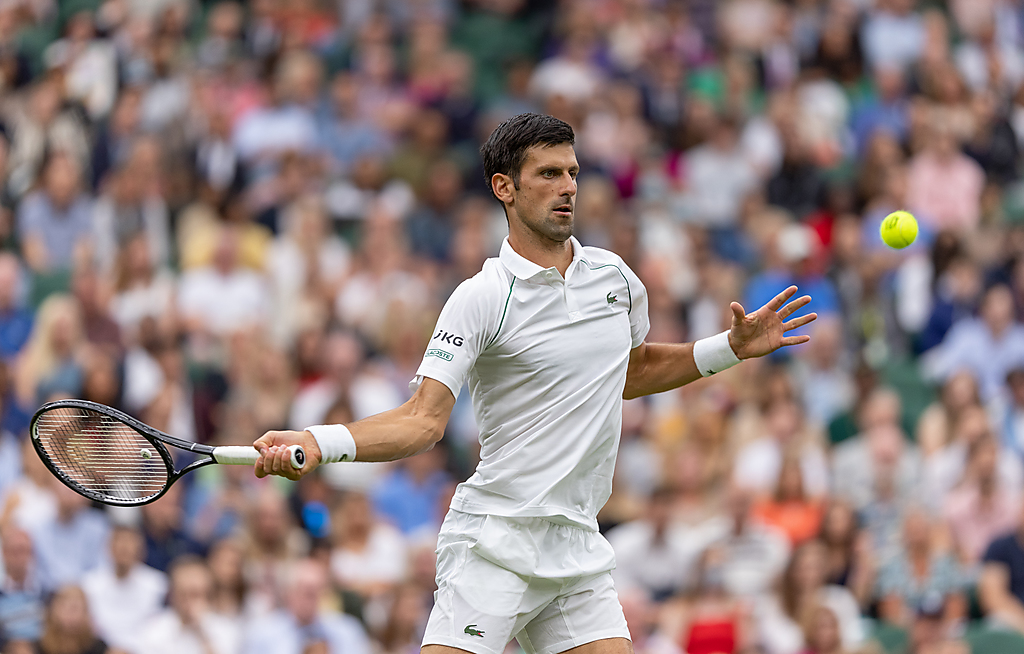
Everybody knew about the complexities of traveling the world during a pandemic but nobody expected that a major dispute would result in the deportation of world No.1 Novak Djokovic who now faces the possibility of a ban from Australia.
The past 11 days have been some of the most extraordinary in modern tennis history with Djokovic arguing his case to be allowed to play the Australian Open despite being unvaccinated against COVID-19. A requirement for all arrivals in the country unless they qualify for an exemption. Djokovic received a medical exemption to play the Australian Open on the basis he tested positive for the virus in December, which was awarded to him by two medical panels in Victoria.
However, the federal authorities stated that prior-infection does not count as an acceptable reason to apply for a visa. Sparking a debate as to if Tennis Australia had been issuing incorrect information or not to players. Subsequently the Australian border force declined Djokovic’s visa and placed him in a quarantine facility. Only to have that decision reversed in the court who deemed that process behind the decision to cancel Djokovic’s visa was insufficient.
Returning to the tennis court in Melbourne, Djokovic still had a black cloud looming over him amid threats he could still be deported. This turned out to be the case on Friday evening when immigration minister Alex Hawke decided to cancel his visa for a second time on the grounds that the Serbian posed a ‘threat’ and could trigger an increase in civil unrest relating to the anti-vaccination movement. A second appeal was then lodged but proved unsuccessful when the Federal Court, which included three judges in this case, unanimously concluded that the legality of Hawke’s legal order to cancel the visa was lawful. Ending Djokovic’s Australian Open dreams once and for all.
“Tennis Australia respects the decision of the Federal Court.” A brief statement from the governing body reads.
In the aftermath of the case, the ATP described the fallout as a ‘deeply regrettable series of events’ as they once again reiterated their call for players to be vaccinated. According to their latest figures, 97% of the world’s top 100 have had their vaccine. The ATP oversees the running of the men’s Tour but they have no decisive power concerning the running of Grand Slams due to tennis’ somewhat complex governing system which consists of seven separate bodies.
“Today’s decision to uphold Novak Djokovic’s Australian visa cancellation marks the end of a deeply regrettable series of events. Ultimately, decisions of legal authorities regarding matters of public health must be respected. More time is required to take stock of the facts and to take the learnings from this situation,” the ATP commented.
“Irrespective of how this point has been reached, Novak is one of our sport’s greatest champions and his absence from the Australian Open is a loss for the game. We know how turbulent the recent days have been for Novak and how much he wanted to defend his title in Melbourne. We wish him well and look forward to seeing him back on court soon.”
Most players have been hesitant to weigh in on the Visa fiasco with some even expressing their frustration that the situation is overshadowing the sport. Andy Murray summarized it as “not great for tennis, not great for the Australian Open and not great for Novak.” Meanwhile, Rafael Nadal said he was ‘tired of the matter’ during an interview with CNN. Nadal has also stated that the Australian Open is bigger than just one player.
Although some have spoken out about Djokovic’s deportation with the most vocal of them being from Vasek Pospisil who is the co-founder of the Professional Tennis Players Association (PTPA) along with the 20-time Grand Slam champion.
“Novak would never have gone to Australia if he had not been given an exemption to enter the country by the government (which he did receive; hence Judge Kelly’s initial ruling*). He would have skipped the Australian Open and been home with his family and no one would be talking about this mess,” Pospisil wrote on Twitter.
“There was a political agenda at play here with the elections coming up which couldn’t be more obvious. This is not his fault. He did not force his way into the country and did not “make his own rules.”
*EDITOR NOTE: Judge Kelly’s ruling was on the procedure used by border force officials to cancel Djokovic’s visa.
Nick Kyrgios used a facepalm emoji to express his disappointment with the ruling. Meanwhile, John Isner said Djokovic was ‘an absolute legend who has done good for millions around the world’ before stating that he disagrees with the ruling to deport him.
On the women’s Tour, Alize Cornet questioned the lack of public support among players towards Djokovic during his legal cases.
“What I know is that Novak is always the first one to stand for the players. But none of us stood for him,” she wrote.
Pierre-Hugues Herbert says he “100% agree” with Cornet. The Frenchman is also unvaccinated against COVID-19 and decided not to attend the Australian Open. He has also recently tested positive for the virus.
As for Djokovic, it is unclear as to where he goes from now or if he will suffer any more backlash following his visa dispute. It was revealed during the court case that he had broken COVID-19 rules in Belgrade by attending a photo shoot hours after testing positive for the virus. Something he later described as ‘an error of judgment.’ Then there are questions as to how Djokovic’s sponsors may react given that some will now perceive him to be an inspiration for the anti-vaxx movement.
Replacing Djokovic in the Australian Open draw is Italian lucky loser Salvatore Caruso, whose entry into the Grand Slam main draw is one which will be talked about for many years to come.
“I didn’t follow the case much, so it’s not my field. I’m here to play tennis, maybe I’m the most famous lucky loser in history? I feel sorry for him,” he told Sky Italia.
Djokovic left Australia on Sunday evening (Melbourne time) on an Emirates flight to Dubai.

