



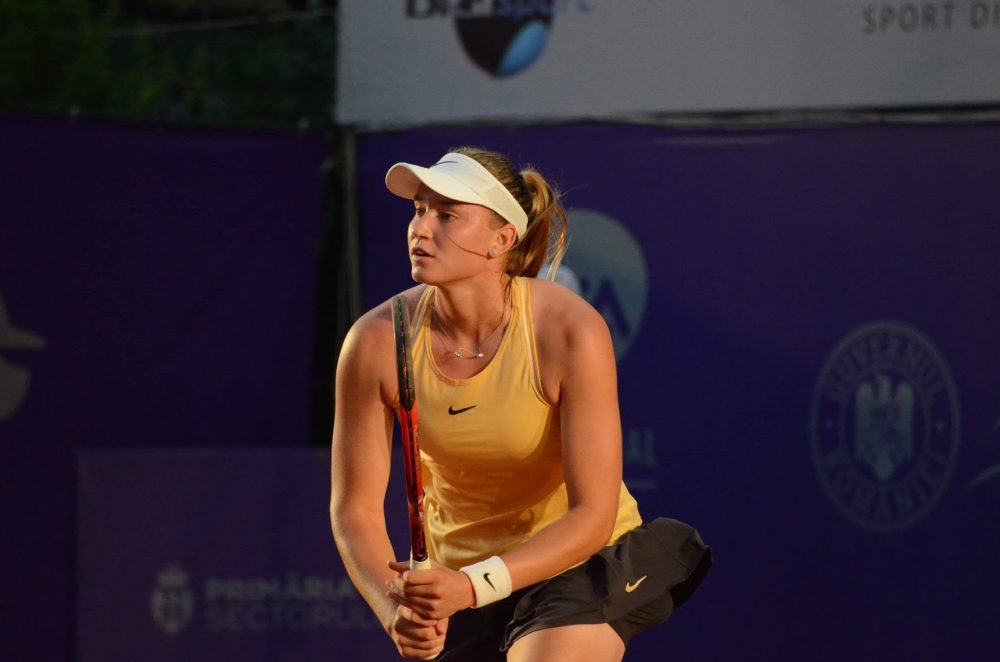
The leap of 2020
While her 2019 performance could leave some doubts as to her actual value as a player, these have thoroughly vanished in 2020. Her Top 50 ceiling, which she couldn’t seem to breach, was utterly demolished thanks to an impressive start to the year. Two Top 10 wins (Pliskova and Kenin, fresh off her Australian Open maiden triumph), two more against Top 20 opponents (Martic, Mertens), and four more against Top 50 competition (Sakkari, Zheng, Zhang, Wang).
This allowed her to compete in her first ever Major, in Melbourne, at do so as a seed, no less. More stats from 2020: five tournaments played, one tournament won, three losses in finals, 21 wins and just 4 losses. What changed? What prompted such an outburst of potential? She has talked about it in several interviews.
Firstly, she had a chance to work exclusively with a coach for the first time, a partnership that’s generated an all-around development. In her words, the coach “has helped me a lot. We talk about tactics for each opponent and he’s improved my serve and my forehand. We work on every detail.” And also: “We’ve been collaborating since February 2019, so it has been exactly one year. I think I’ve made strides pretty much in every aspect: my serve, my technique, my strategic skills. He’s been helping me a lot. Yeah, I’ve made progress in every aspect.”
These are two very similar answers, which in my opinion are spot-on in singling out the reasons of her breakthrough: small improvements in every domains, with the total being greater than the sum of its parts. To better analyse her progress, we can make a comparison with the player who won the Bonfiglio Trophy in 2017 with the one who just reached the final in Dubai.
The starting point is her built – Rybakina is really, really tall. Her WTA profile has her at six feet and a half, but I think she’s actually under-reported, as Karolina Pliskova confirmed after her recent loss at Elena’s hands: “She’s maybe taller than me. That’s a good help for a good serve, I think. She hits it. She can go over 190. She’s quite strong.” Pliskova is officially measured at 6’1’’.
Why am I stressing her height so much? Because while being so haute, Rybakina is extremely coordinated on the court, never taking a wrong step. We know that lankiness is usually more evident in bean-pole athletes, but by taking a look at her 2017 Bonfiglio match, it clearly emerges that even back then she moved like a shorter player.
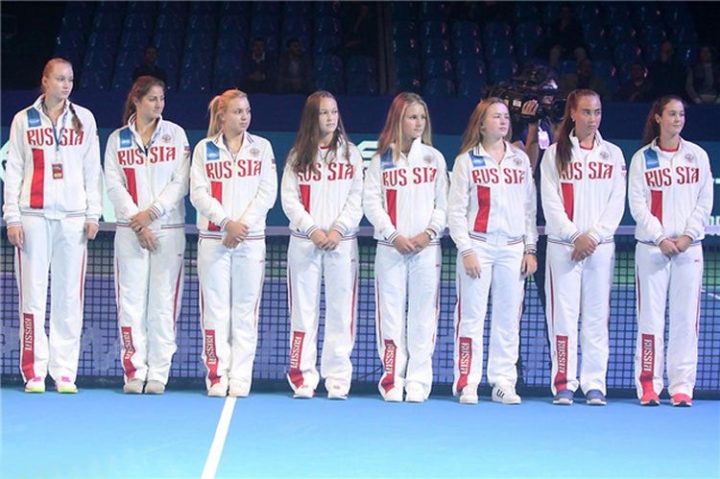
What was underwhelming about her young self was how little of an edge she seemed to be gaining from her size when it came to strike the ball. Her height should give her a huge serving advantage and lights-out power from the baseline, due to longer levers. And yet, during her match in Milan she didn’t hit hard at all, and her serve didn’t look particularly dominating either.
Presently, though, I’m beginning to think that the under-development of her hitting potential at the junior level made her a more unique (and certainly better) tennis player. As a teenager, Rybakina didn’t count on her power to win matches, but she rather worked on different, and more nuanced, aspects of her game, both from a tactical and a technical standpoint – needless to say, this shtick is paying off. Nowadays, she’s a much more complete player, as compared so some of her colleagues who are unmistakably mono-dimensional, having always centred their game around one trick.

