



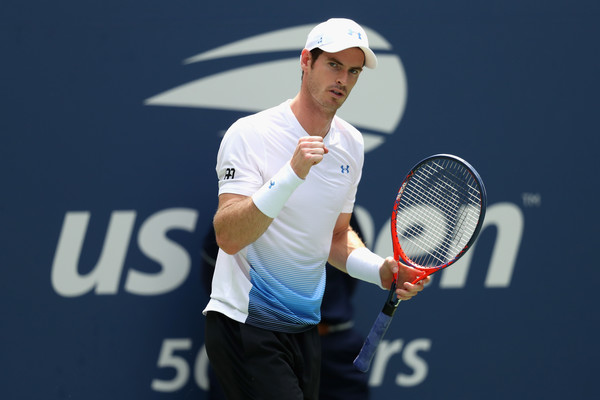
The use of on-court coaching could play a role in combating tactical timeouts, according to three-time grand slam champion Andy Murray.
The former world No.1, who is currently conducting off-season training in America, has briefly talked about the topic on his Instagram account. Over the weekend he had a hitting session with Spain’s Fernando Verdasco. A player who he previously accused of talking to his coach during their US Open match in August. After the third set there was a 10-minute break in accordance to the heat policy. Players are not allowed to talk with their coaches during that period.
“When I came out of the shower, his (Verdasco’s) coach and one of the Spanish doubles players were in there chatting to him, and you’re not allowed to speak to your coach,” Murray said afterwards.
35-year-old Verdasco denied any wrongdoing, before later saying ‘I know exactly the rule and I don’t want to be the one breaking it.’ The Spaniard went on to beat Murray in four sets.
Taking to Instagram, Murray has named two potential ideas that could be used to address players deliberate taking time outs to either rest a bit more or disrupt their opponent’s momentum. It has long been an issue in the sport, but can be hard to prove. Especially when it comes to aches and pains.
So what can be done in the future? Murray has outlined two possible solutions. The first is for players to have their coaches brought onto the courts whilst their opponent takes a break. On-Court coaching is currently only allowed on the WTA Tour and in qualifying of some grand slam tournaments.
“If a player wants to go to the toilet or have a medical timeout, then his/her opponent is allowed to bring a coach onto the court for the duration of the break. Limiting the advantage gained of disrupting rhythm/momentum. The TV would love this as it would give them something to talk about during delay.” Murray wrote.
The other idea is for the player who calls for a timeout to forfeit their opponents next service games. The idea being to make the situation more fair to both sides of the court during matches.
“If a player wants to call a medical timeout, they forfeit opponents next service game so when they restart it’s always on their serve. I think players would only get the physio/doctor out if it was a genuine issue in this scenario.” He explained.
According to current rules, medical time-outs are limited to three (3) minutes of treatment per match. Players are allowed (1) Medical Time-Out for each distinct treatable medical condition.
Murray is set to return to action at the start of January at the Brisbane International.

